Integrating Notes – November 2024
- Nov
- 27
My monthly newsletter seeks to connect you to sources of wisdom and inspiration in order to help you live a more integrated – joyful, purposeful, capable, and connected – life.
Dear Boston Brain Integration Community,
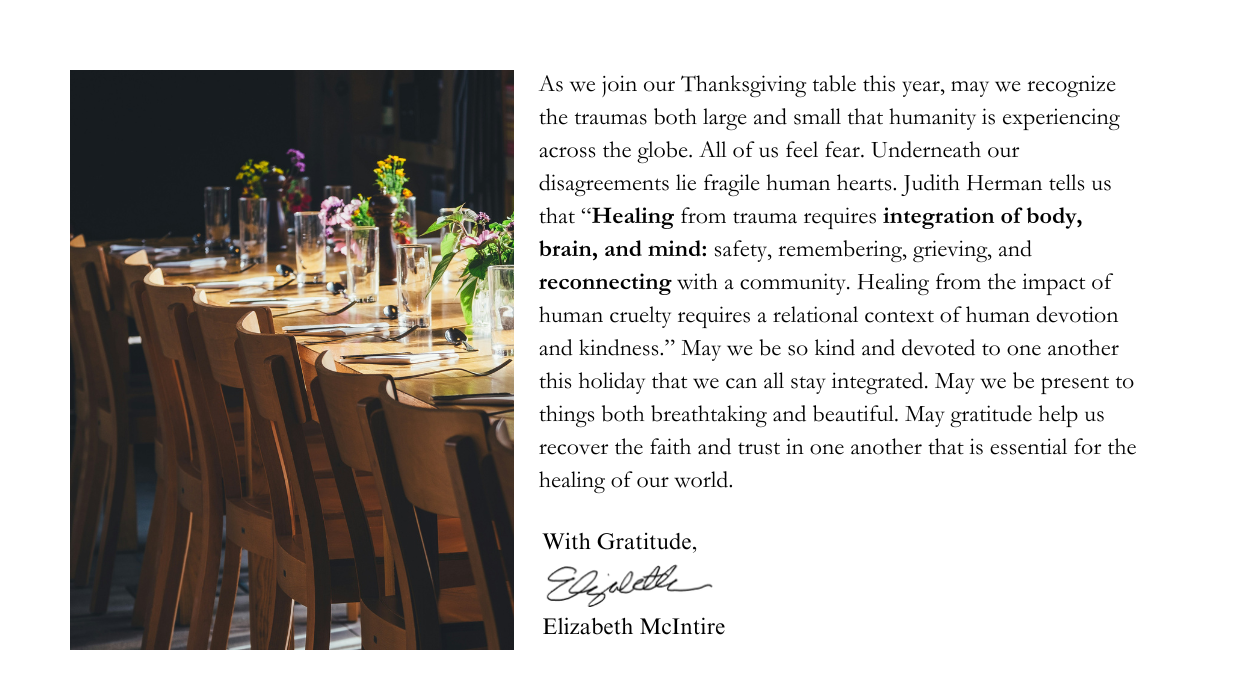
As we move toward Thanksgiving, a time of coming together to eat delicious food at one shared table, I am mindful of the complex emotions swirling in homes all over this country. For many, the recent presidential election exposed divisions that pose a profound existential threat. It is hard to know how to come together when one person’s ideas threaten another’s life.
Fear is a universal emotion. It is driven by different instincts and sensitivities, and it is experienced throughout life by all of us. From the infant gasping for their first breath of life to my friend’s 97 year old mother, who panics when her COPD makes it hard to breathe, we all feel fear. And so we should. Humans are conscious of death nearly our entire lives. It is incredibly difficult to hold this knowledge in our bodies and continue to get up and go to work every day. Whatever political party we might belong to, the intensity of our polarization reveals the depths of our fear.
“Us vs. Them” thinking is not just an external reality. It is equally hard to bridge the divide within our own minds. The more stressed we feel, the harder it is for our two hemispheres – Logic and Gestalt – to stay connected inside our own heads! As fear rises, the complexity of our thinking diminishes. In this state, it is hard for the body to even recognize it has two hands, much less two feet as well.
Whether we have endured Complex Trauma or simply the trauma of remaining open in an increasingly uncertain world, Judith Herman’s work on trauma recovery has lessons for all of us. The more awareness we have about our internal state, the more easily we can advocate for ourselves and one another. Gratitude practices are a powerful antidote to fear and a welcome addition to any Thanksgiving table. May these resources and ideas bring patience and compassion to your feast.

From Trauma and Recovery by Judith Herman, MD:
“Psychological trauma has a curious history…of episodic amnesia. [For over 100 years,] it has been periodically forgotten and must be periodically reclaimed” (Herman 9).
Humans don’t like to stay present to the truth of how vulnerable we are. And yet anyone who experiences “repeated exposure to stories [and experiences] of human rapacity and cruelty” will inevitably find their basic faith in humanity threatened (Herman 203). Anyone who watches the news has been shaken this way.
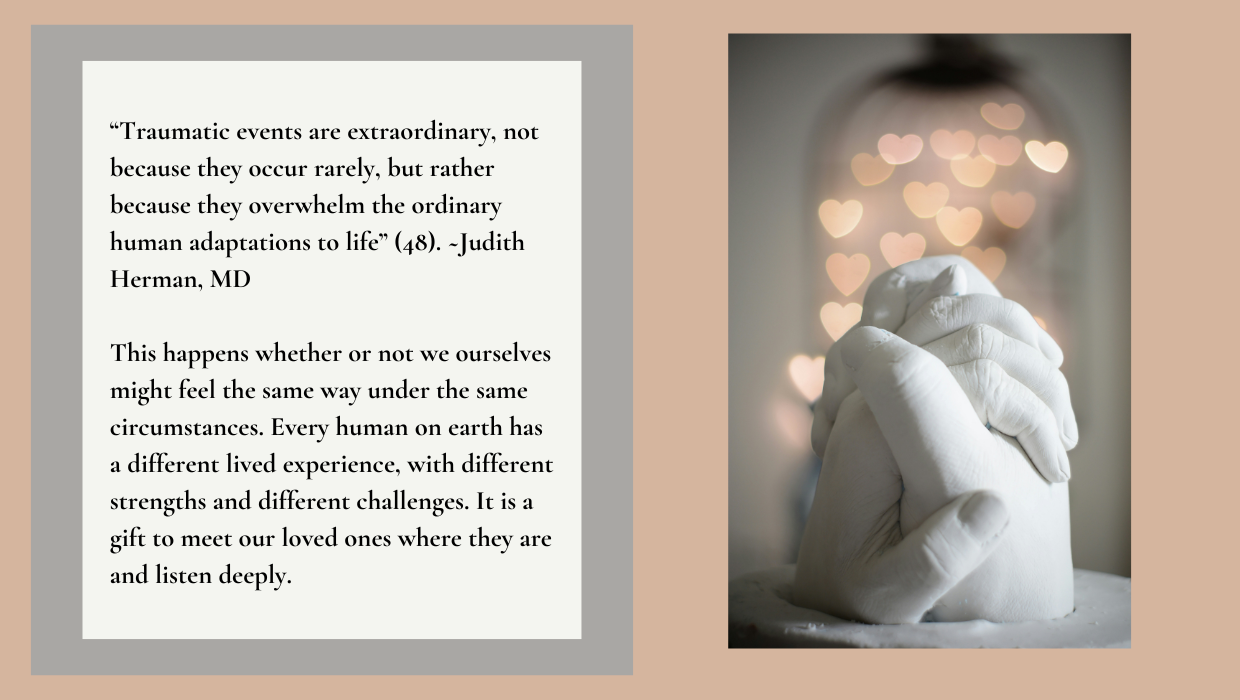
“Recovery unfolds in three stages. The central task of the first stage is the establishment of safety. The central task of the second stage is remembrance and mourning. The central task of the third stage is reconnection with ordinary life” (Herman 223). When we sit across from each other, we must remember that not only do we have different thoughts, feelings, and experiences, but we are also at different stages. Some people in my community are already looking ahead at how they might take action to protect the vulnerable during the next presidential administration. Others are still feeling the loss and are struggling with debilitating depression. Still others have stresses that are consuming them much closer to home. Noticing where we are in the stages of trauma recovery gives us the ability to see our progress and find hope.
Let’s just notice…
- What are you afraid of today?
- When have you felt as courageous as you’ve ever been?
- How might sharing your vulnerability with those you love deepen your connection with ordinary life?

Gratitude: The Key to Unlocking Your Brain’s Full Potential
By Noah McIntyre (He/Him) Founder of DiscoverGratitude.org
Gratitude isn’t just a feel-good emotion; it’s a potent force that shifts our brain chemistry, fostering resilience, enhancing neural connections, and promoting overall well-being. As you approach family gatherings that may bring both joy and stress, gratitude becomes the catalyst for profound transformation.
Here’s how you can integrate gratitude into your daily routine:
1. Awareness: Cultivate a “Moment of Mindfulness.” Take 5 minutes daily to connect with your body and breath, appreciating your brain’s intricate orchestration of your being. Affirm: “I am grateful for my brain’s ability to process, adapt, and heal.”
2. Acceptance: Embrace challenges with “Grateful Reflection.” Reframe setbacks as opportunities for growth, acknowledging your brain’s role in navigating difficulties. “I accept that today was stressful, and I am grateful my brain adapted to find solutions.”
3. Alignment: Engage your senses with “Gratitude Alignment.” Savor the beauty around you, the sounds that soothe you, the textures that please you, expressing gratitude for each sensory experience.
4. Connection: Nurture relationships with “Gratitude for Relationships.” Express gratitude to someone who supports you, recognizing their positive impact on your well-being.
5. Peace: Find serenity with “Gratitude Meditation for Calm.” Place your hands over your heart, breathe deeply, and silently affirm: “I am at peace. I am grateful for my brain’s healing and wholeness.”
By incorporating these gratitude practices, you’ll not only enhance your brain function and reduce stress but also cultivate a deeper sense of appreciation for the incredible power and resilience within you.
About the Author:
Noah McIntyre is a wellness advocate, gratitude coach, and the founder of Discover Gratitude, a community dedicated to fostering connection, mindfulness, and holistic well-being through the transformative power of gratitude. With a passion for supporting individuals on their journey to mental and emotional balance, Noah integrates themes of mindfulness, neuroscience, and connection into his work. Learn more about Noah’s work and join the gratitude movement at DiscoverGratitude.org.