Integrating Notes – March 2025
- Mar
- 30

My monthly newsletter seeks to connect you to sources of wisdom and inspiration in order to help you live a more integrated – joyful, purposeful, capable, and connected – life.
Dear Boston Brain Integration Community,
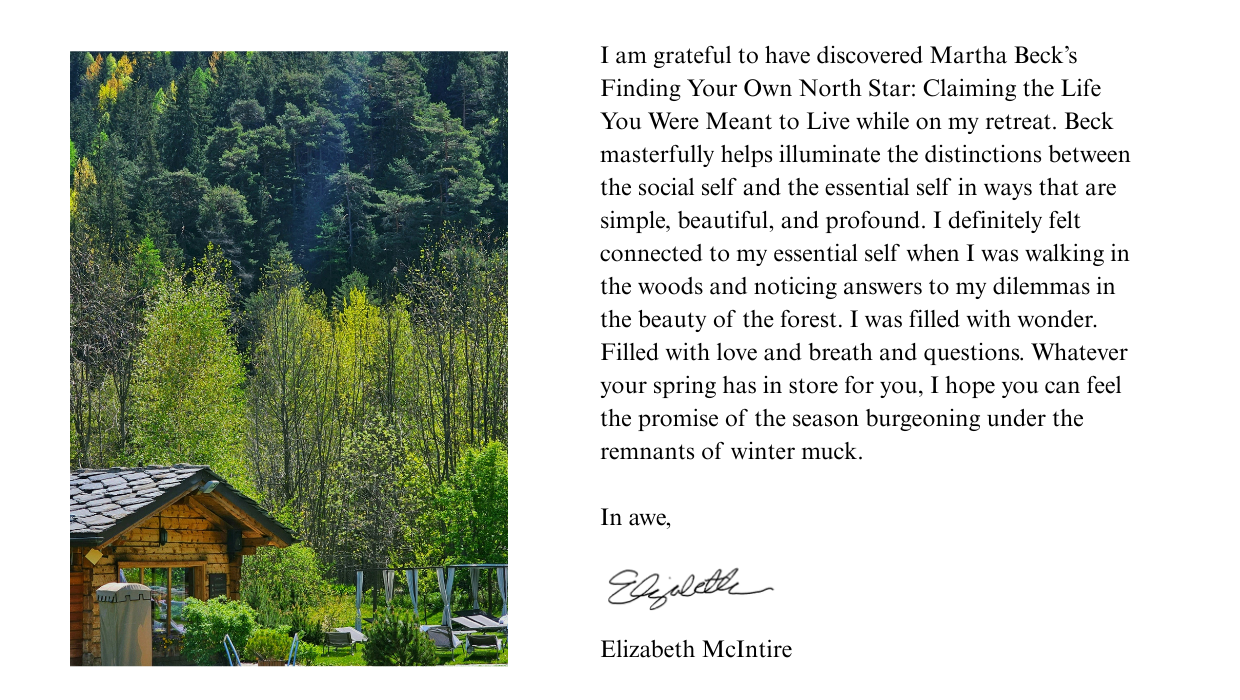
Spring has sprung! Oh the joy of this season has always filled me with exuberance. No matter what else is going on in the world, still the crocuses come up. And the irises and daffodils and tulips and a hundred other green things that are too tender to recognize yet. I am just back from a weekend away writing in a cabin in the woods, and I am feeling so grateful for nature. Have you ever set an intention to ask Nature for her views on things, and taken a walk? It’s such fun!
Our right brain so easily understands and communicates through natural phenomena. Modern life is boundaried by screens and spreadsheets, and our homes and businesses are filled with straight lines and right angles. This is one reason why forest bathing, or “shinrin-yoku” in Japanese, is so beneficial. Forest bathing is the practice of spending time in nature, particularly forests, in order to improve your health and well-being. Essential elements of forest bathing include slowing down and connecting with the forest’s sights, sounds, and smells. The practice reduces stress, improves mood, and is known to boost our immunity.
This spring, take a moment to try this:
- Think of something you are trying to sort out in your life. It could be what to do about an issue at work, wondering how you feel in a new relationship, or questioning how to navigate a challenge as a parent. The options are endless.
- Now go for a walk! The more trees and natural phenomena, the better. Wherever you are, simply observe what is around you. Is the path open or barred? What draws your attention? Do you see healthy, vivid life or do you find yourself noticing what is dying? What does your body do? Do you trip or are you walking easily? Notice what surprises you.
- When you get home, write in a journal about everything you noticed. You may be surprised to find how much clearer your dilemmas seem, when you look for the answers in the natural world. I know I did!


Dr. Martha Beck is a New York Times bestselling author, life coach, and speaker. She holds three Harvard degrees in social science, and Oprah Winfrey has called her “one of the smartest women I know.”
Martha is a passionate and engaging teacher, known for her unique combination of science, humor, and spirituality. Her recent book, The Way of Integrity: Finding the Path to Your True Self, was an instant New York Times Best Seller and an Oprah’s Book Club selection.
Her latest book, Beyond Anxiety: Curiosity, Creativity, and Finding Your Life’s Purpose, is now available.
Each of us has these two sides: the essential self and the social self. The essential self contains several sophisticated compasses that continuously point toward your North Star, [your right life…la verace via]. The social self is the set of skills that actually carry you toward this goal. Your essential self wants passionately to become a doctor; the social self struggles through organic chemistry and applies to medical school. Your essential self yearns for the freedom of nature; your social self buys the right backpacking equipment.
This system functions beautifully as long as the social and essential selves are communicating freely with each other and working in perfect synchrony. However, not many people are lucky enough to experience such inner harmony…If your feelings about life in general are fraught with discontent, anxiety, frustration, anger, boredom, numbness, or despair, your social and essential selves are not in sync.
Part of you – your essential self – knows your own desires at every moment of every day (even when the message is a contented “I want exactly what I have, thank you”). Anytime you think you don’t know what you want, it’s because your social self has decided you shouldn’t want it. Your social self lives by what psychiatrist Alice Miller sees as the cardinal rule of all repressive social systems: “Thou shalt not be aware.” In other words, reject unacceptable sensations. Cut the phone lines between desire and the knowledge of that desire. Don’t know what you know, and don’t feel what you feel.
Exercise: Channeling Your Body
[Connect with your body and] have a conversation with any of it that feels locked up, frozen, numb, or hurt. As a solo exercise, this seems to work best on paper. For example, if your thumb hurts, take a notebook and write, “Thumb, what are you trying to tell me?” Then write down whatever response you feel coming from your thumb: “I’m longing to hitchhike again,” “I wish I were a lower primate—opposable digits entail so much responsibility,” “You hit me with a hammer, you idiot.” Don’t censor or criticize, and most of all, don’t think. If nothing comes up, relax and focus your mind on your breathing. Unexpected responses may bubble up as soon as your brain looks the other way.
Whatever it says to you, your body will tell you the truth about getting to your North Star. You can trust it.
Let’s just notice…
- How connected do you feel to your essential self? Are you aware of the difference between the voice of your essential self, and the voice of your social self?
- How does it feel to try and connect to your body? Do you feel able to trust it?

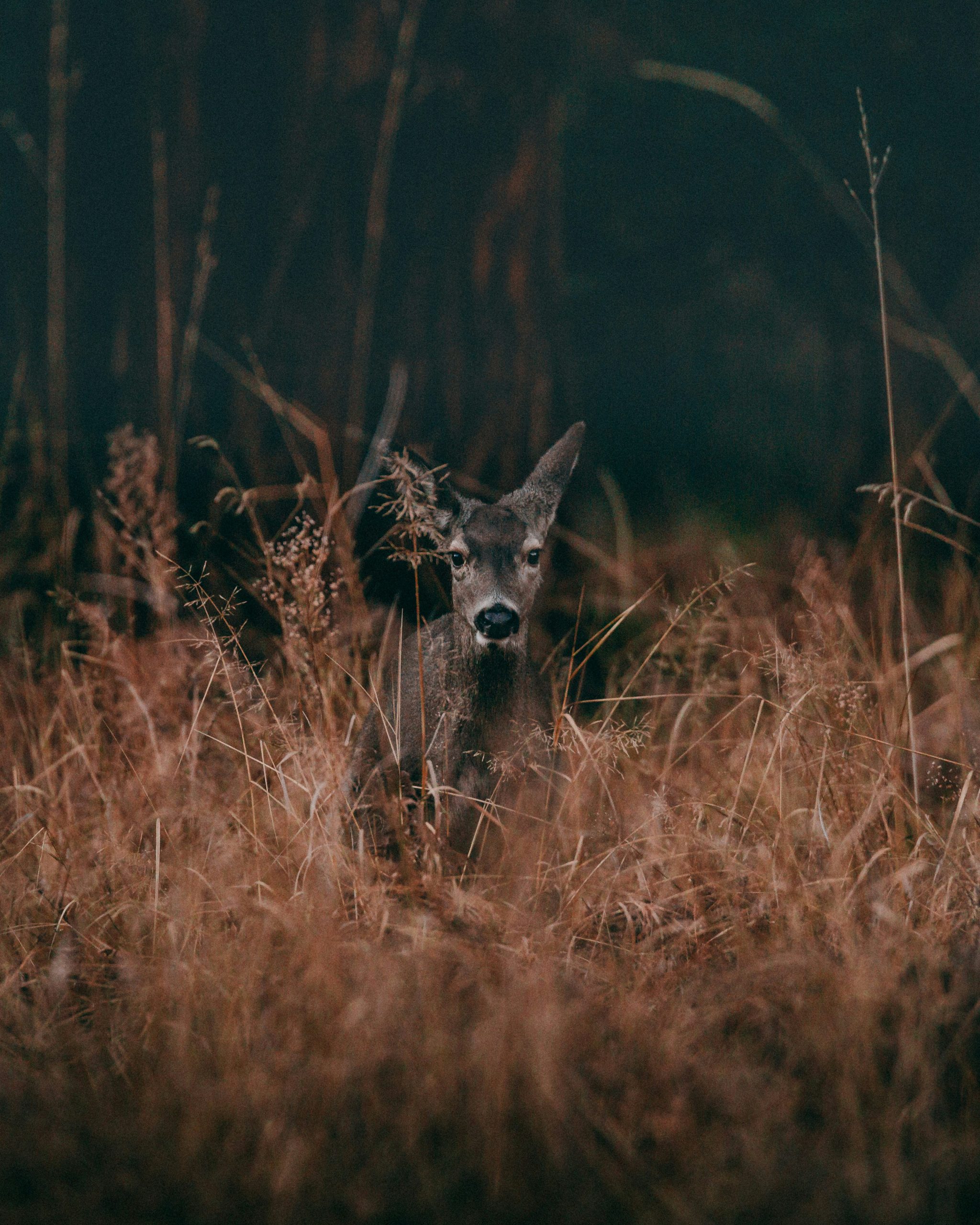
Let Me Wonder, By Judy Williams
Early, on a spring morning—a hustle in a thicket.
A doe, white flag upright, breaks the stillness
in a single bound over field grass dripping with dew.
Eyes wild, ears erect, long legs retracted under sinewy torso.
I gasp, as startled as she to find this other creature in this solitude.
For a moment she seems to hover at the apogee
of a long, graceful arc—her entire being suspended.
Later, city poised in pre-dawn stillness, I walk in silence,
dog at my side, his breath and mine marking the rhythm
of our efforts with frosty exhalations, my boots keeping time
to the percussive beat of his nails. From our left,
in a frost-covered backyard, comes a flash of fur.
I turn to watch three does scatter. The smallest casts back
a glance as wistful as the one I feel.
Still later, as we return to our yard, we spy the three does.
Now, there is safe distance, so the does, too, pause, as if to take
our measure. I hold my breath. The dog is taut, uncommonly calm.
A breeze whispers through the hydrangeas.
Deer, dog, and human—
we let go of fear, engage in wonder. Then, as if on signal,
the does disappear, one by one, into the tree line.
The smallest is the last to go.
Each day,
each moment,
each breath
offers questions.
Let me feel my breath
come in, go out.
Let me love
the questions.
Let me wonder.