

Integrating Notes – September/October 2025
- Dec
- 10
My monthly newsletter seeks to connect you to sources of wisdom and inspiration in order to help you live a more integrated – joyful, purposeful, capable, and connected – life.
Dear Boston Brain Integration Community,
I have spent the past two months immersed in Dr. Lisa Lahy and Robert Kegan’s work, Immunity to Change: How to Overcome it and Unlock the Potential in Yourself and Your Organization . Their work is all about “how to close the gap between what people genuinely intend to do and what they are actually able to bring about.” This is everything I think about every day as a Brain Integrator!
One of the exciting things Dr. Lahy was able to illuminate for me is something I’ve known intuitively for a long time: “Any way of knowing can be described with respect to that which it can look at (object) and that which it looks through (the filter or lens to which it is subject). Young children, for example, are still subject to their perceptions, so when something looks small to them (like cars and people viewed from the top of a tall building), they think it actually is small. Three-, four-, and five-year-olds will look down and say, ‘Look at the tiny people!’ Children of eight, nine, and ten can look at their perceptions. They will say, ‘Look how tiny the people look!’”
No matter what we are working on in my office, we are always trying to look at our perceptions. If something is hard to do or process, why might that be? Could it be a brain processing issue, in which case, Brain Integration is an incredible tool for opening up and reconnecting neuropathways that aren’t working properly. Or could it be a place where our evolution or development is stuck and in need of growth? Dr. Lahy talks a lot about the difference between technical challenges, where “the skill set necessary to perform these complicated behaviors is well known,” and adaptive challenges, which “can only be met by transforming your mindset, by advancing to a more sophisticated stage of mental development.”
As we learn more from Dr. Lahy and Dr. Kegan about how adult development is intimately connected with our ability to grow, change, and achieve our goals, I invite you to breathe deeply and consider with compassion, “Where am I stuck and what do I need to get unstuck?”

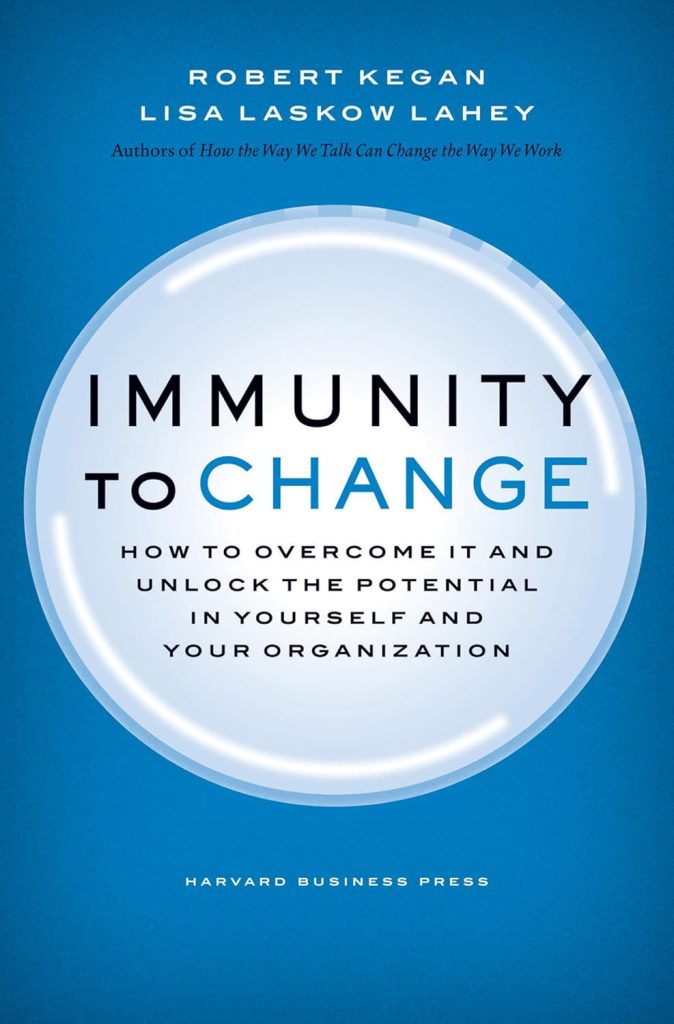
From Immunity to Change: How to Overcome it and Unlock the Potential in Yourself and Your Organization
by Lisa Lahy and Robert Kegan
“Three adult meaning systems – the socialized mind, self-authoring mind, and self-transforming mind – make sense of the world, and operate within it, in profoundly different ways.” Within a socialized mind, what I think to express “will be strongly influenced by what I believe others want to hear.” What I hear and understand is equally influenced within a socialized mind where “maintaining alignment with [others] is crucial to the coherence of one’s very being.”
Within a self-authoring mind, what I express “is more likely to be a function of what I deem others need to hear…The self-authoring mind [also] creates a filter for what it will allow to come through. It places a priority on receiving the information it has sought.”
The self-transforming mind can stand back from its own filter and look at it, not just through it…The self-transforming mind both values and is wary about any one stance, analysis, or agenda…Self-transforming minds are “not a prisoner of that filter…they place a higher priority on information that may also alert them to the limits of their current design or frame…People with self-transforming minds have found ways to let [others] know [challenging] information will be welcomed,” so they are more likely to receive it.
Each different level of mindset complexity differently draws the line between what is subject and what is object. Greater complexity means being able to look at more (take more as object). The blind spot (what is subject) becomes smaller and smaller.
Let’s just notice…
- What stage of adult development do you find yourself living in most of the time? Are there places in your life where you feel more developed – at work, at home, with friends, etc. – and places where you feel less so?
- What value does your own growth and development have for you?
- What dangers do your blind spots pose?

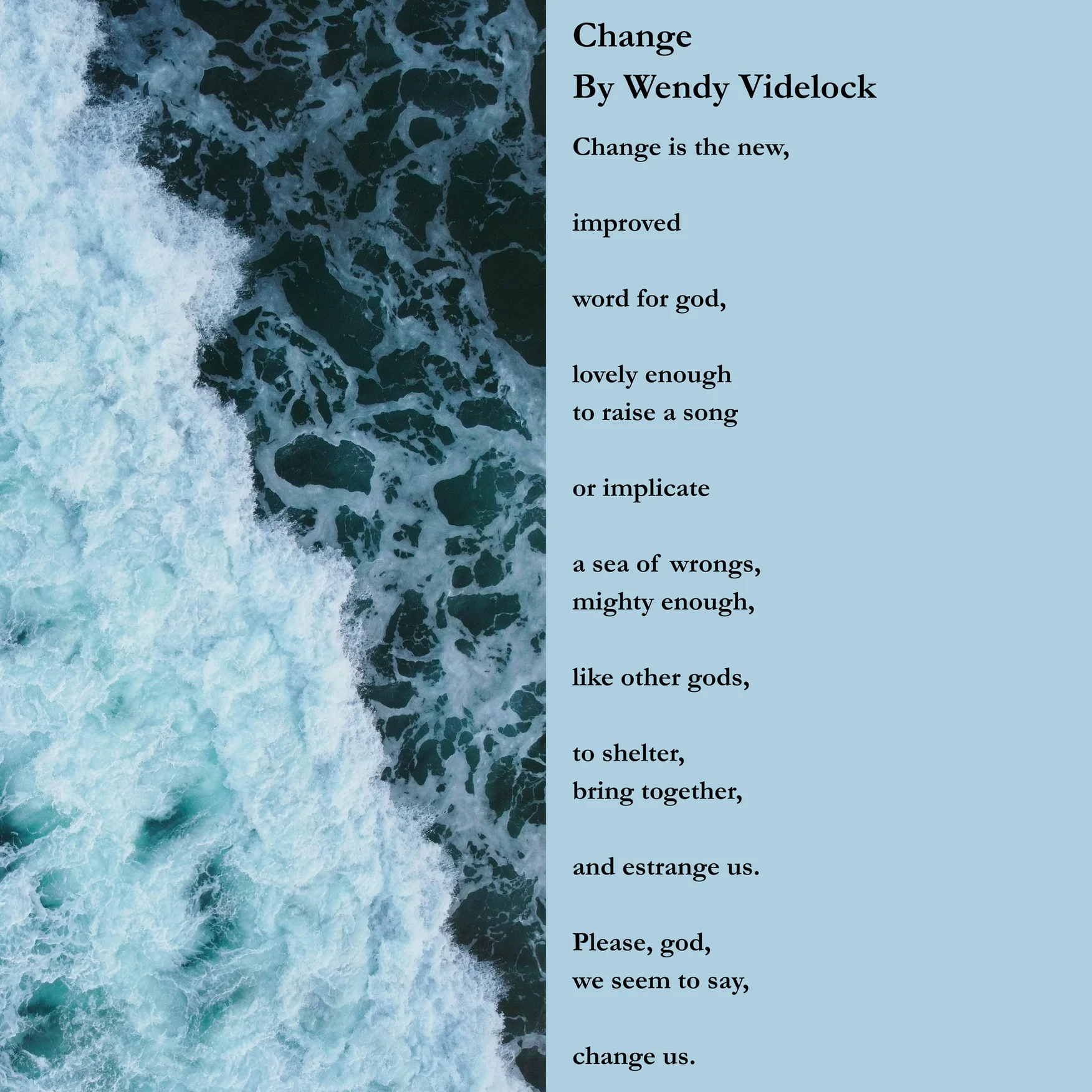

There is a reason change is so hard. It takes a lot to build a human brain – a psyche, mind, heart, personality, moral compass, brilliant body, and more. As each lived experience shapes us, our brains develop what Lahy calls, an emotional “immune system” designed to protect us. As we grow and develop, we encounter challenges that need more mental complexity than our earlier operating systems were designed for. In these moments, we need to change. As I look around the world, both within and without, I see the need for growth and the poignant challenges to achieving it, everywhere I look. None of us can do life alone. This month, we are learning that “the evolution of mental complexity [is a] gradual process of mental differentiation and reintegration, of looking at a way of making meaning we used to only look through, of shifting subject to object.” This is what Brain Integration is all about. Whatever challenges we face, why so ever they may be, every Brain Integration session is a gradual process of mental differentiation – teasing apart our Selves from our Issues – and reintegration – noticing the stuck places, and giving them the support they need to integrate and heal. Next month, we will learn more from Dr. Lahy about her strategies to meet our emotional “immune systems” where they are, recognize the anxieties they conceal, and successfully grow, develop, and change in response. Until then, be kind to yourselves. As Wendy Videlock conveys, change is hard and lovely and mighty and estranging and capable of everything. May we be so brave as to embrace our own evolution.

For anyone who may receive this newsletter and knows someone on a cancer journey.
A Boston Brain Integration Announcement
Boston Brain Integration is a proud partner of Connect and Thrive
CAT’s mission is to help women connect with a community of partners who can help them thrive.
CAT is a social impact company for cancer previvors, patients, thrivers, and caregivers. CAT empowers women on their personal healing journeys by connecting them to our Marketplace of reputable practitioners and curated products. CAT’s partners offer integrative therapies and healthy living products that help to prevent cancer, navigate a cancer diagnosis, and mitigate the risk of recurrence.
Reference: https://app.connect-and-thrive.com/marketplace/420
