

Integrating Notes – October 2024
- Oct
- 30
My monthly newsletter seeks to connect you to sources of wisdom and inspiration in order to help you live a more integrated – joyful, purposeful, capable, and connected – life.
Dear Boston Brain Integration Community,
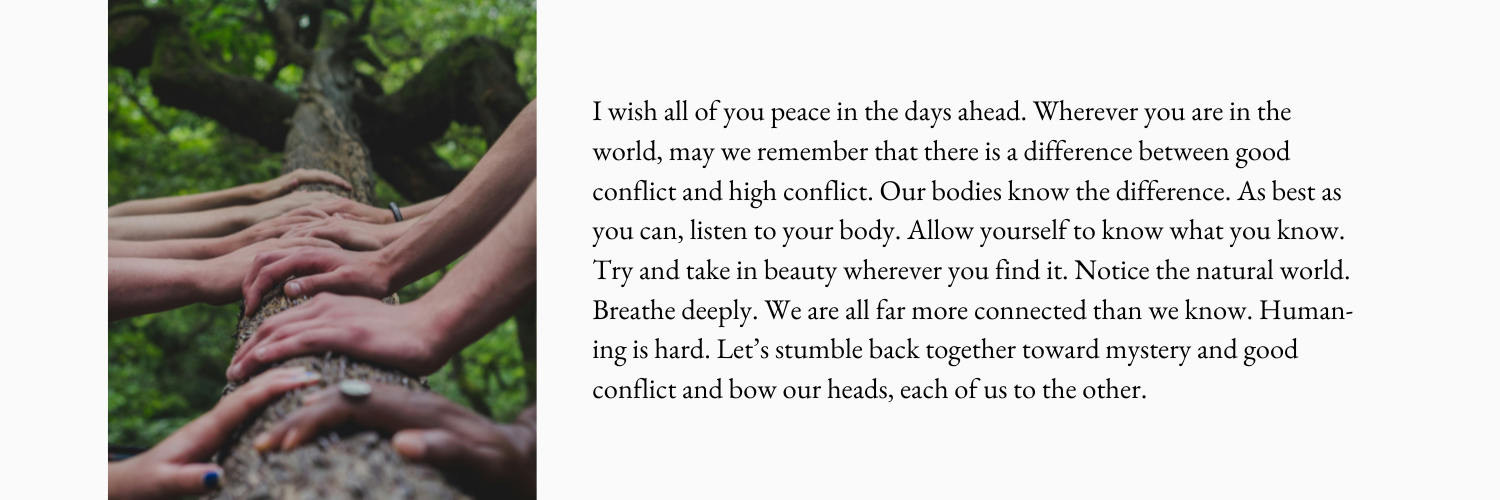
As the election nears and conflicts all over the world escalate and become more complex by the day, it can feel hard to stay integrated. Humans are social beings. We are impacted by world events: our climate changing, a lack of trust in our neighbors and institutions, the way things we have always taken for granted seem suddenly complex and uncertain. All of this has an impact. This month, I’d like to share some practices for how to stay integrated – Connected to ourselves and one another – during times of stress and uncertainty.

From High Conflict: Why We Get Trapped and How We Get Out by Amanda Ripley:

Let’s just notice…
- How do you feel in your body when you are in conflict with someone you love?
- What happens to that body response when you’re in good conflict? How does your body feel when you’re in high conflict? Are you able to notice a difference?
- How easy is it to feel connected to yourself and your loved one when you are in conflict? Does the conflict ever eclipse your sense of connection?
Amanda Ripley’s book makes clear how easily we can all fall into high conflict. Even the most integrated among us can be triggered into old patterns where our “brain behaves differently.” One of the most helpful tools for differentiating what kind of conflict we’re in is to learn to assess the state of our body and notice what is happening in our eyes, palms, belly, jaw, feet, and breath as we respond to conflict. Try pausing long enough to notice your own physiological responses to all that is going on in your world.
From that pause, you may find space in which to choose what action you do (or don’t) take next.

Inspiration from poet, Mary Oliver:

When was the last time you noticed something and laughed in astonishment? If it has been awhile, what do you notice around you right now that is perfectly ordinary and yet also astonishing? See if you can allow yourself to take it in.
- What mysteries delight you?
- What mysteries scare you?
- Why does Mary Oliver suggest that we “keep [our] distance, always, from those who think they have the answers?
For me, the breath exists in the questions. The truth is there. It’s in the noticing. Whether I am noticing beauty or conflict, joy or pain, there is power and purpose in observing.
With Gratitude,
Elizabeth McIntire
